Canada's top court upholds most of Quebec's religious symbols ban
Canada's Supreme Court left Quebec's Bill 21 largely in force on Friday, striking it down only for members of the provincial legislature.
What we know
- The Supreme Court of Canada ruled on Friday, Nov. 27, 2026, that Quebec's Bill 21 is valid and in force, with one exception.
- The exception is section 8, the face-covering rule, which the court struck down only as it applies to members of Quebec's National Assembly.
- Seven justices issued four sets of reasons, and the court split on whether judges can formally declare that a law shielded by the notwithstanding clause breaches the Charter.
- The law bars religious symbols for teachers, police officers, government lawyers and other officials in positions of authority.
- Premiers and rights groups reacted along opposing lines, and Ottawa said it is reviewing the decision.
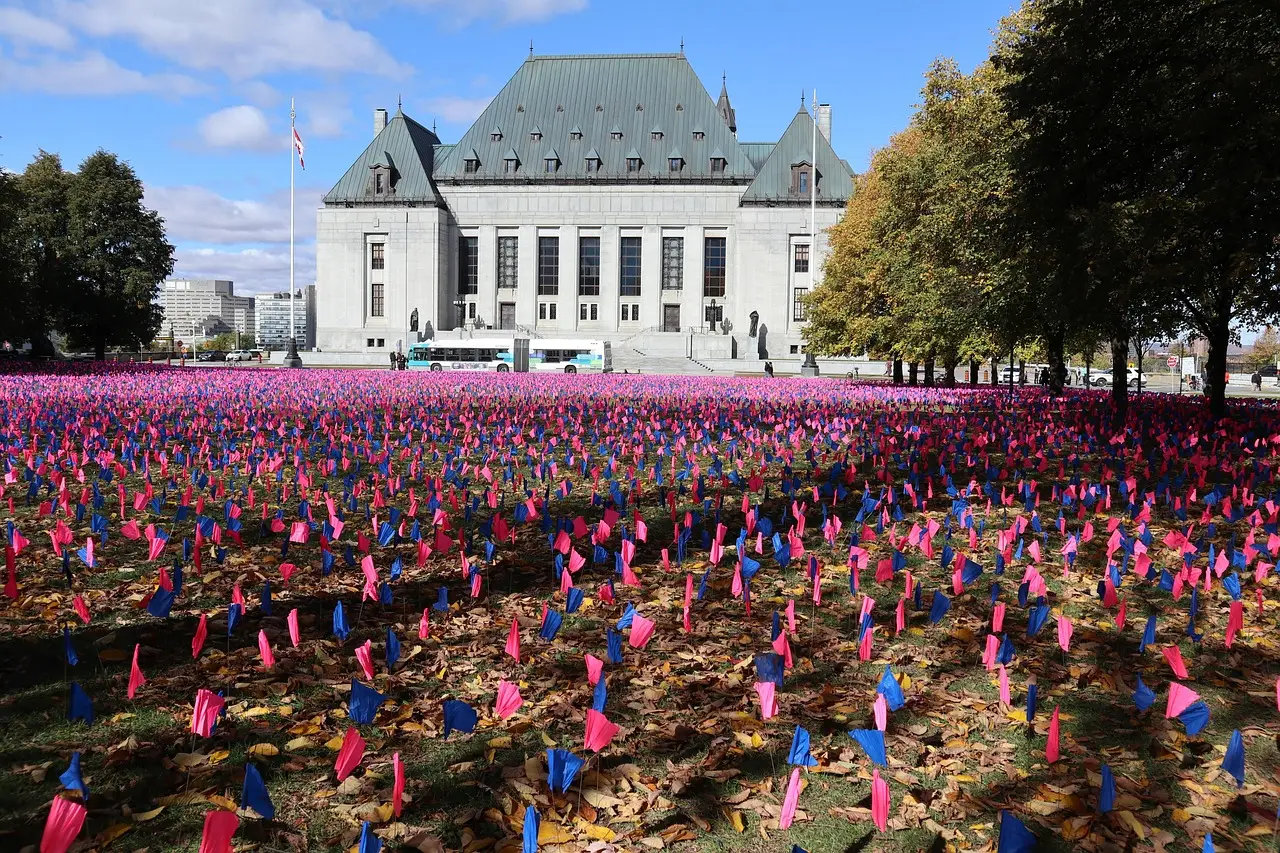
Canada's Supreme Court on Friday left Quebec's secularism law, known as Bill 21, largely in place. The justices rejected the appeals against it and also dismissed a cross-appeal by Quebec. The one change affects the provincial legislature, where a face-covering rule was struck down for members of the National Assembly.
The law, passed in 2019, bars people in certain positions of authority from wearing religious symbols at work. It covers public school teachers, principals, police officers, prosecutors and lawyers who act for the state. According to Canadian HR Reporter, the case was heard over four days in March, and the federal government and five other provinces took part as interveners.
What the court decided
The case is listed as English Montreal School Board v. Quebec (Attorney General). The court found the law valid and operative except for section 8 as it applies to Assembly members. Canadian HR Reporter said all of the justices agreed that requiring legislators to keep their faces uncovered violates the Charter's guarantee of the right to be elected, a right the notwithstanding clause cannot override.
Bill 21 invokes that clause, which lets a legislature shield a law from challenges based on freedom of religion, expression and equality. The court heard seven justices and produced four sets of reasons. Chief Justice Richard Wagner wrote that the law is rooted in Quebec's "legitimate and historical commitment" to the laicity of the state, according to the Globe and Mail's live coverage of the ruling.
The justices divided over whether courts may declare that a shielded law infringes Charter rights, without striking it down. Canadian HR Reporter said four justices would allow such declarations and three would not. Of the four, some wanted to issue one in this case on sections 6 and 8 of the law. In their dissenting reasons, Justices Michelle O'Bonsawin and Andromache Karakatsanis said the provisions "put devout Quebecers in a terrible dilemma."
The court also rejected arguments based on the Charter's gender equality section by a 4-3 margin, and it turned aside a claim from English-language school boards based on minority language education rights.
Who is affected
Canadian HR Reporter said most of the people affected by the law are Muslim women. The dissenting justices pointed to a trial court finding about the Montreal school service centre: each applicant whose job file was closed under Bill 21 was a Muslim woman who wore a hijab. The Globe and Mail named two of the challengers: Nevien Waly, an aspiring teacher who wears a hijab, and Amrit Kaur, a Sikh teacher who wears a turban.
Reaction
Alberta Premier Danielle Smith called the ruling "a win for provincial rights and for the democratic balance that holds our federation together." Manitoba Premier Wab Kinew called Bill 21 legislative racism and said he expects tension when premiers meet in Toronto next month, the Globe and Mail reported.
The Canadian Civil Liberties Association said it was deeply disappointed, and the National Council of Canadian Muslims said the decision gives governments an unrestricted licence to override rights. The English Montreal School Board said it will keep lobbying to amend or abolish the law. Federal Justice Minister Sean Fraser said Ottawa respects the court's independence and is reviewing the decision.
What happens next
The notwithstanding clause lapses after five years unless a legislature renews it. Four of the justices wrote that declarations of infringement help inform voters, who weigh in when renewal comes up. The Globe and Mail reported that the Parti Québécois formed a minority government last month and has promised a third referendum on independence. Opponents of the law said they plan to continue through political channels and lobbying.
Sources
- Canadian HR Reporter, read Nov 28, 2026
- The Globe and Mail, read Nov 28, 2026
This story was written by the Trusted News 71 newsroom with AI assistance from the sources above. Report an error.
Related articles

Diana Award charity enters administration; Prince William responds
The Diana Award, the UK youth charity founded in 1999 in memory of Princess Diana, has entered administration, and Prince William thanked those who built it.

Taipei's KMT mayor Chiang Wan-an wins a second term
Taipei Mayor Chiang Wan-an of the opposition KMT won re-election by about eight points over the DPP's Puma Shen, as the DPP gained ground elsewhere in Taiwan's local elections.
Blast beside Afghan school kills at least 10 students, hurts 110
An explosion at a house storing mining dynamite beside a middle school in Asadabad, Afghanistan, killed at least 10 students and injured about 110, the Taliban interior ministry said.

Ukraine offers Black Sea truce as drones hit Russian oil sites again
Ukraine says it has offered Russia a Black Sea ceasefire for grain exports and is awaiting an answer, while drones reportedly struck two Russian oil sites overnight.